Setting up team values for kudos
You will learn what team values are in Dailybot, why they anchor recognition to culture, and how to create, edit, and maintain a focused set your teammates will actually use.
Team values are the bridge between a nice message and a repeatable culture. They turn “thanks for the help” into “thanks for living our customer focus” or “thanks for showing ownership.” When values are clear and few, people choose them quickly when they give kudos. When values are vague or numerous, recognition feels like paperwork.
Dailybot keeps values next to kudos so the habit stays lightweight. You are not running a separate HR program. You are giving teammates a shared vocabulary for praise that matches how you already talk about success.
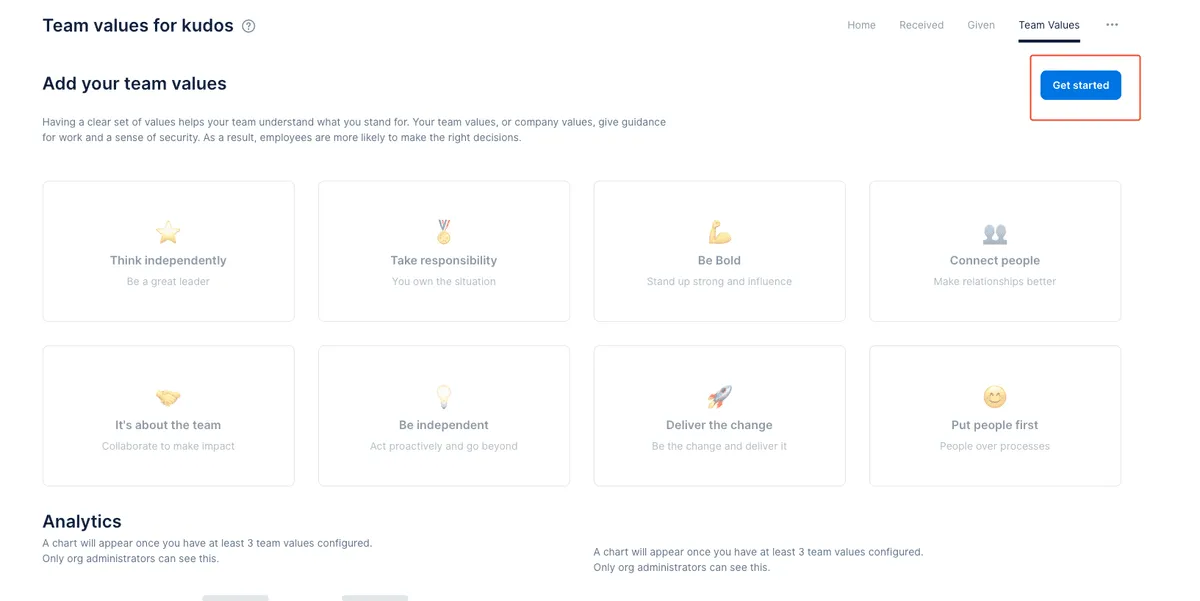
Open the team values area
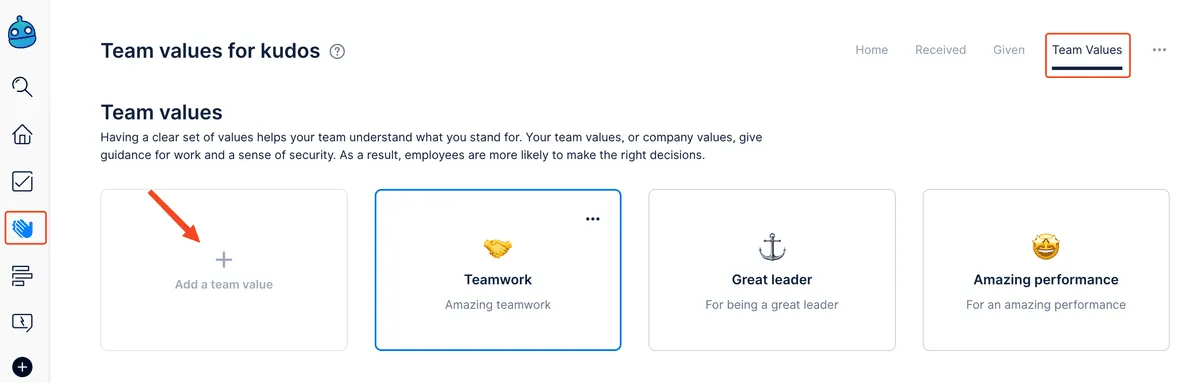
Go to the Dailybot web app and open Kudos from the sidebar. Select the Team Values tab. That screen lists every value your workspace uses today and the controls to add, edit, reorder, or remove them.
If you are not an admin, you may need someone with permissions to make changes. Share this article with them and agree on the first draft set of values before you announce anything company wide.
Create your first value
An empty state means you are defining culture from a blank page. That is fine. Start with one value you already say out loud in meetings, then grow the list after people are comfortable giving kudos.
Use this sequence the first time you add a value:
- Click “Add a team value” to open the form.
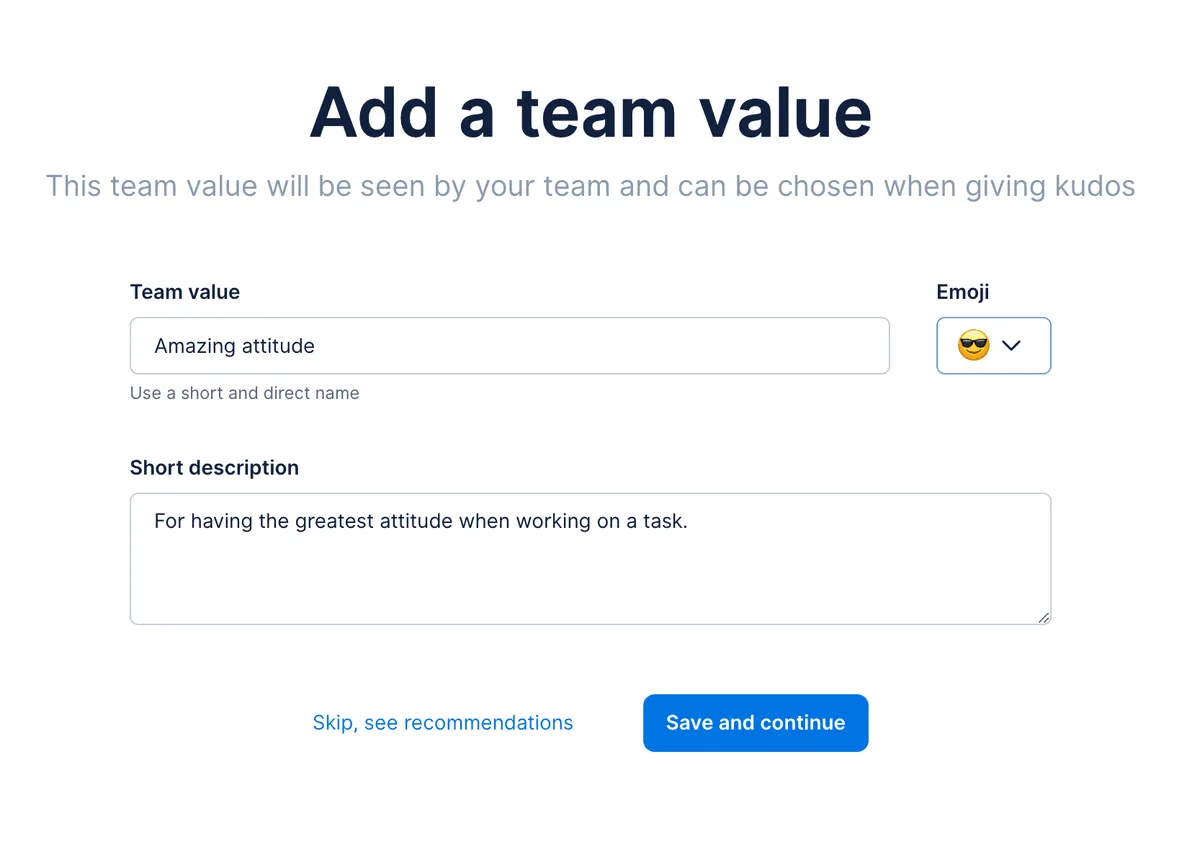
- Name the value in plain language and add a one or two sentence description teammates can read when they are unsure which label fits.
- Pick an emoji that reads well at a glance in chat and dashboards.
- Optional: Browse Dailybot’s recommendations if you want starter ideas you can edit to match your tone.
- Save so the value appears the next time someone sends kudos.
Descriptions should answer “what would I see someone do if they lived this value?” Concrete beats abstract. Prefer “We clarify expectations early and reset dates when plans change” over “We communicate well.”
Manage values over time
After values exist, you will revisit them as the team grows. The management menu on each card lets you edit wording, change emoji, reorder the list so the most important values appear first, or retire values that no longer fit.
Reordering matters because people often pick from the top of the list when they are in a hurry. Put your non negotiables first. Retire values that never get selected, or rewrite them if the idea is right but the label confuses people.
Examples of strong values
Strong values sound like behaviors, not slogans. They help someone who is about to send kudos in ten seconds pick the right tag without a committee.
Consider patterns like these when you draft your own:
- Customer clarity: we explain tradeoffs in simple language and confirm understanding before we ship.
- Ownership: we follow problems to resolution and hand off cleanly when another team must take over.
- Kind directness: we give feedback early, in private when sensitive, and with specifics.
Avoid values that are impossible to observe or that duplicate each other. If two values always show up together, merge them.
Rollout tips
Announce new values in a short note that explains why you chose them and how they connect to kudos. Ask leaders to use the values in their own recognition first. In your next retrospective or standup, spend two minutes highlighting one kudos that used a value well.
Review usage quarterly. If one value dominates while others gather dust, either rename the dusty ones or admit the strategy changed. Culture is allowed to evolve. The values list should evolve with it.
Dailybot ties recognition to the language you want your company to speak every day. When values are honest, lean, and maintained, kudos stop being random cheerleading and start reinforcing how you actually want to work together.
FAQ
- What is a team value in Dailybot?
- A team value is a labeled principle, with a name, short description, and emoji, that appears when someone gives kudos. It connects praise to the behaviors your organization wants to repeat.
- Why link kudos to values at all?
- Without values, recognition is pleasant but fuzzy. With values, every kudos reminds the team what good looks like in your language, which helps new hires learn norms and helps leaders spot culture drift.
- How many values should we start with?
- Most teams do best with three to five values at first. Too many choices slow people down at send time and dilute the signal. You can add more later once usage is steady.