Using icebreaker questions to build team connection
You learn why icebreakers help remote and hybrid teams, which question styles fit different moments, how to run them without awkwardness, and how Dailybot can deliver prompts automatically.
Remote and hybrid teams lose the easy chemistry of shared space. You do not pass the same coffee machine or hear about weekend plans in passing. Without a little structure, meetings jump straight into work and people stay partially invisible to each other. Icebreaker questions are a small intervention that pays outsize returns when you use them with care.
They are not about forcing intimacy. They are about giving everyone a low stakes turn to speak so later conversations feel safer. When someone has already shared a hobby or a favorite book in a two sentence answer, they are more likely to speak up when a real issue appears.
When icebreakers help most
New teams benefit from early prompts that surface personalities and working styles. Long running teams still need occasional warmth, especially after hiring waves, reorganizations, or stressful launches. Even tenured groups can slip into transactional mode if nobody resets the social layer.
Icebreakers also help across time zones. People who join while others are ending their day often feel like satellites. A quick human moment at the top of a call signals that their presence matters, not only their output.
The key is proportion. One thoughtful question beats a long chain of games when everyone is tired. Match the energy to the meeting length and stakes.
Styles of questions you can rotate
Different prompts serve different goals. Light creative questions invite imagination and laughter. Reflective questions invite a sentence about values or habits, which builds trust more slowly but deeply. Pure fun questions keep morale up during heavy quarters. Get to know you prompts help map common interests that later become real collaboration.
You might use a creative prompt on a Friday retro, a reflective prompt during a planning week, and a quick fun question before a dense technical review. Variety keeps the ritual from feeling stale.
Below are examples you can copy, adapt, or load into a template. Pick one per meeting rather than running the whole list.
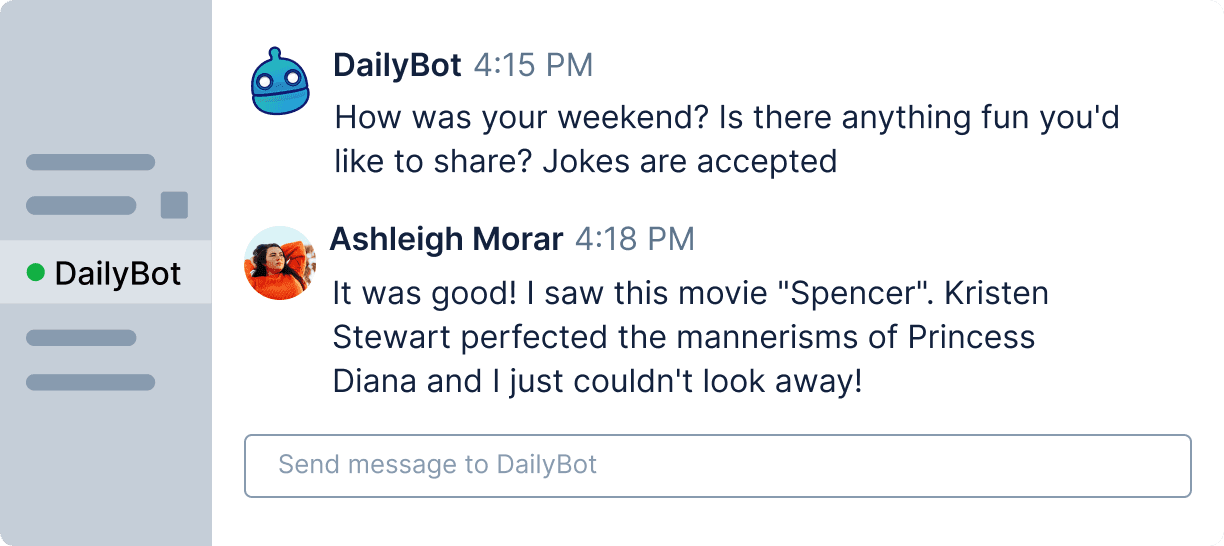
- How was your weekend, and what is one small thing you are glad you did?
- If you have a pet, share a photo link or a one line description of their personality.
- What song or album have you had on repeat lately, and why?
- What is a hobby or passion outside work that you wish more people knew about?
- If you could learn any new skill overnight, what would you pick and how would you use it?
- What is a food you could eat every week and never get tired of?
Framing matters. Invite jokes where appropriate, make clear that pass is always okay for personal topics, and thank people briefly for sharing so the room stays kind.
Keeping icebreakers natural, not forced
Awkward icebreakers usually come from pressure, not from the questions themselves. If you read a prompt like a compliance exercise, people will answer like they are filling a form. If you treat it as a genuine curiosity, they mirror that tone.
Keep timing tight. Two or three minutes per person is often enough in larger groups. In small teams, you can allow a little more room if the energy is good. Name the purpose in one sentence so skeptics understand why you are doing it.
Rotate who picks the next question so ownership spreads. When the team co creates the ritual, it feels less like a top down exercise and more like a shared habit.
Automating prompts with Dailybot
Consistency is the hardest part. Someone forgets, meetings run long, and the human moment is the first thing cut. Scheduling fixes that. Dailybot can deliver icebreaker prompts directly in chat on the days you choose, so the nudge arrives without a manual reminder.
You keep control of tone by editing the template and cadence. Teams see the same friendly rhythm whether you are in the office or spread across continents, which helps new members onboard into a culture that already expects a bit of warmth.
Icebreakers will not replace great management, but they make everything else a little easier. When people feel connected, they collaborate faster, give feedback sooner, and bring more of themselves to the work. Dailybot helps you sustain that habit in the flow of work, so connection stays on the calendar even when the week gets loud.
FAQ
- Why use icebreakers on remote or hybrid teams?
- They replace hallway small talk with intentional moments of personality and warmth. That lowers social friction, helps new hires feel seen, and reminds people there are humans behind the avatars.
- What types of icebreaker questions work best?
- Match the tone to the moment. Use light and creative prompts for energy, reflective prompts for trust building, and get to know you prompts when the team is forming or onboarding.
- How can Dailybot help teams run icebreakers consistently?
- You can schedule friendly prompts in chat so they appear on a cadence the group expects. That keeps connection habits alive without someone having to remember to post every week.