Career development conversations that drive growth
You learn why recurring career talks improve retention and engagement, which questions reveal goals and skill gaps, and how to turn answers into development plans using simple async check-ins.
When someone quiet quits or suddenly interviews elsewhere, the story often starts months earlier with a missed conversation about growth. People stick around when they see a plausible path, get honest feedback, and know their manager will advocate for development. You do not need a perfect program to make that true. You need a steady habit of asking good questions and doing something with the answers.
Why growth talks beat annual plans alone
Annual reviews still have a place, but they are a poor substitute for ongoing dialogue. Skills change, priorities move, and personal circumstances evolve faster than a yearly form can capture. If the only time you talk about careers is during a performance cycle, you are guessing for eleven months and reacting in the twelfth.
Short, recurring career conversations signal that growth is normal work, not a special event. They also surface risk early. Someone who feels stuck often drops hints in small comments long before they update a resume. When you invite those topics regularly, you get a chance to adjust workload, training, or role scope while fixing the problem is still cheap.
Engagement follows naturally when people believe the organization invests in them. That does not mean unlimited training budgets. It means clarity about what advancement looks like, which skills matter next, and how you will help them practice those skills on real work.
What to explore in each conversation
You are not running an interrogation. You are creating space for the other person to think out loud with you as a partner. The best prompts are open enough to invite honesty and specific enough to avoid one word replies.
You will want to understand how they see their role today, where they want to be in the next year or two, and what is in the way. You also want to know what support looks like for them, whether that is time, mentorship, tooling, or air cover from you on priorities. If you only ask about happiness, you may miss concrete blockers. If you only ask about tasks, you may miss ambition.
The following questions work well as a rotating set in surveys or prep notes before a deeper chat. Pick a few each time so the conversation stays fresh.
- Where do you want more challenge or stretch in the next few months?
- Which skills do you want to grow that would help you and the team?
- What would make it easier for you to do your best work each week?
- How clear is your view of growth paths here, and what would make them clearer?
- Who or what has helped your development lately, and what is missing?
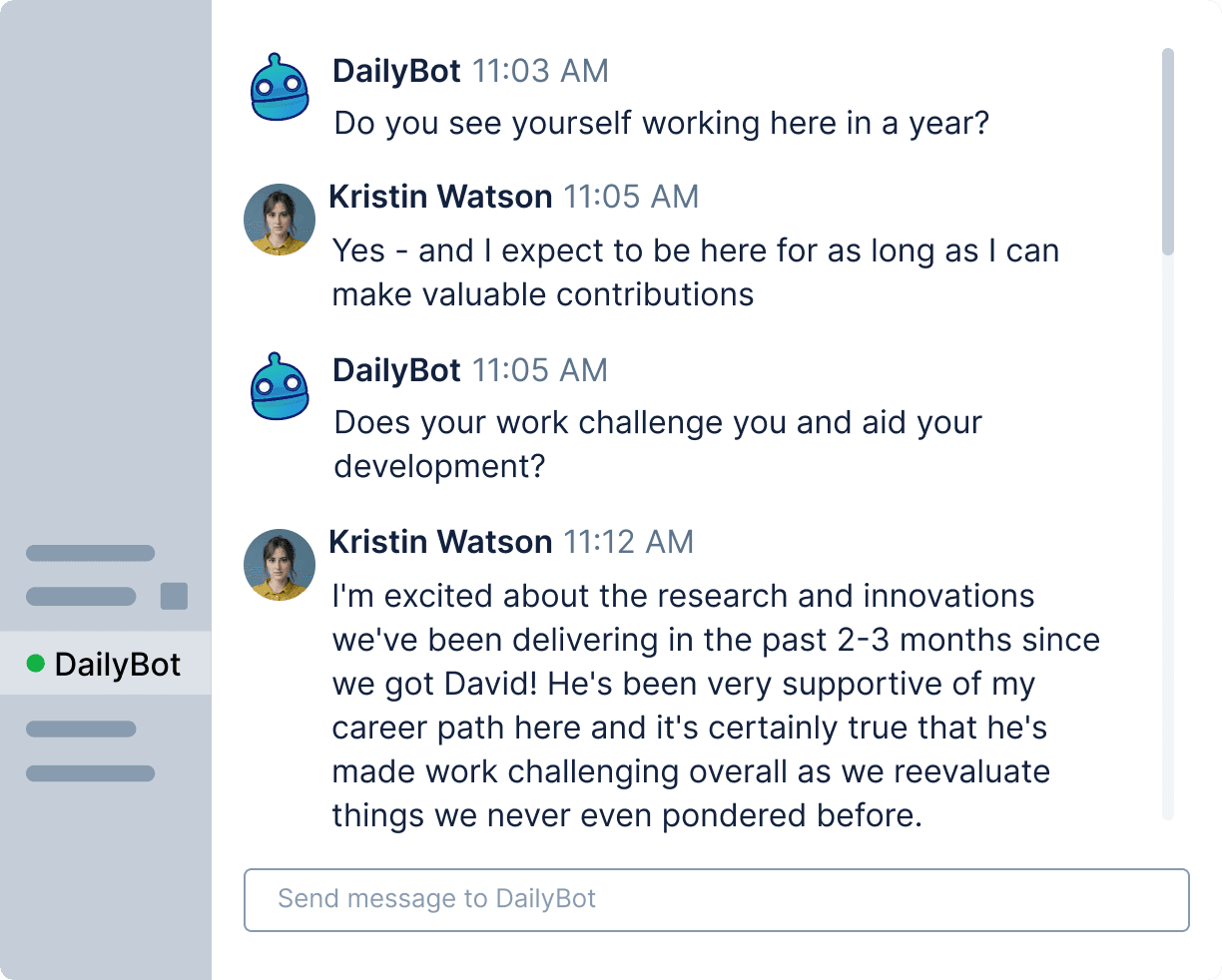
- When you picture yourself here in a year, what would need to be true for that to feel exciting?
Listen for patterns across weeks. One rough sprint is noise. Four consecutive check-ins that mention burnout or lack of learning is a trend you should act on.
From answers to real development moves
Collecting replies is only useful if it changes behavior. After you review what someone shared, translate themes into one or two visible commitments. That might be a project assignment, a course, a buddy for code or design review, or a recurring slot on your calendar for coaching. Write down what you agreed to and follow through on the next one on one.
When several people mention the same gap, for example unclear expectations for promotion, treat it as a team or org issue. Share themes with leadership, adjust leveling guidance, or run a group session. Individuals should not carry systemic confusion alone.
Anonymous pulses can help when you need blunt signal about whether people see paths and resources at the company level. Use them to complement, not replace, personal follow up. If survey data says people feel unsupported, your next step is still a conversation with real names and specific plans.
Making the habit stick with async check-ins
Busy calendars are the enemy of good career dialogue. Async prompts solve the scheduling problem by giving people time to think before they write. You can send a short set of questions on a monthly or quarterly cadence, then use responses as the agenda for live time together.
That is where Dailybot fits naturally into your routine. You configure recurring career or growth check-ins in the tools your team already uses, so prompts show up where work already happens. You get a steady stream of structured input you can scan before meetings, spot trends across the team, and route into planning without building a separate spreadsheet culture.
When career development lives in small, repeatable moments, you spend less time firefighting attrition and more time building people who want to grow with you. Dailybot helps you keep those moments on the calendar without adding another heavy process, so growth stays visible all year, not only when forms are due.
FAQ
- Why do recurring career conversations matter for managers?
- They build trust, lower the odds of surprise turnover, and tie everyday work to longer term goals. When people believe you care about their path, they stay engaged and tend to raise issues earlier.
- What kinds of questions work best in a career development check-in?
- Blend prompts about current goals, skill gaps, support needed, and aspirations. Add questions about blockers and what is going well so you get concrete answers instead of vague politeness.
- How can Dailybot support career development rituals?
- You can run scheduled prompts in chat on a rhythm the team expects, then review replies before coaching talks. That gives you steady signals across the team without relying only on annual reviews.