Making one-on-one meetings more productive
You learn why one on one meetings matter, how to avoid hollow status updates, which questions surface real blockers, and how async prep through Dailybot helps every conversation start with context.
A one on one meeting should feel like the safest thirty or sixty minutes on the calendar. It is where someone can tell you what is actually hard, where you can coach without an audience, and where small misunderstandings get fixed before they become drama. When these meetings work, retention and performance both get easier. When they drift into passive updates, everyone quietly wonders why they are there.
What strong one on ones accomplish
The goal is not to duplicate standups or project reviews. You already have channels for task movement. The one on one is for the human layer of work: morale, growth, friction with peers, clarity of expectations, and how your leadership lands.
You also get signal you cannot scrape from tickets. Someone might be fine on paper and still feel under challenged, overloaded, or unsure how they are perceived. Those feelings drive decisions about whether to stay, how much extra effort to give, and whether to speak up when something is wrong.
If you treat the slot as optional or purely operational, you are leaving that signal on the table. The people who need you most are often the least likely to book a separate conversation.
Common traps and how to avoid them
Many one on ones fail for predictable reasons. There is no agenda, so you both improvise and default to status. You run late or cancel often, which teaches people their time with you is expendable. You talk the whole time, or you jump to solutions before you understand the problem.
Another trap is the vague opener. Questions like “How is it going?” invite “Fine” and the conversation dies. You get better results when you ask about energy, obstacles, and what would help, and when you leave silence so the other person can fill it.
You do not need a script for every minute. You do need a few reliable prompts and a habit of closing with commitments. If you promise to remove a blocker or follow up on feedback, write it down and report back next time. Trust compounds from those small proofs.
Questions that surface what really matters
Rotate prompts so meetings stay fresh. Use written prep when you want shy people to share more fully. The list below is a practical menu you can pull from or automate ahead of the meeting.
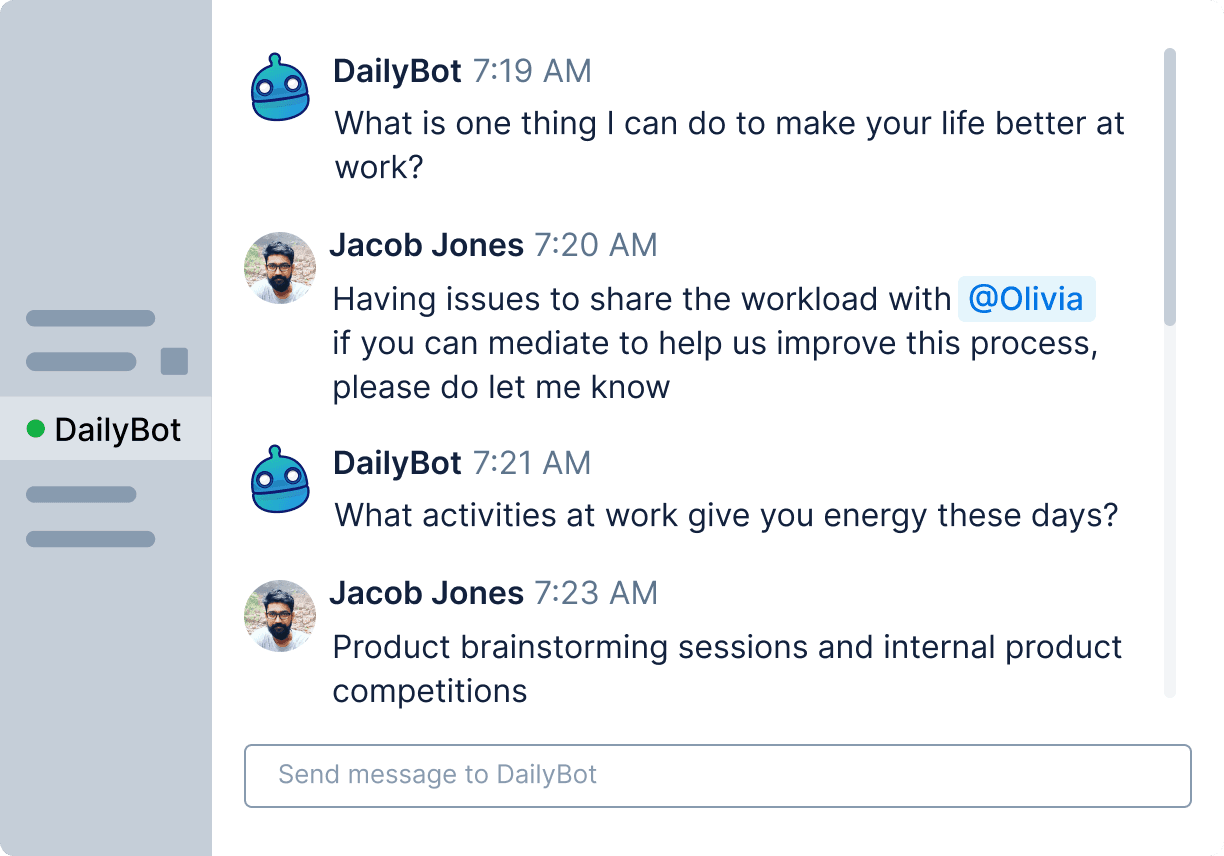
- What is one thing I could do this week to make your work life easier?
- Which activities lately have given you energy, and which have drained you?
- What feedback would be most helpful right now, and how do you like to receive it?
- Where do you feel your time is not well spent, and what would you change if you could?
- What is the biggest challenge since we last spoke, including people or process issues?
- Is there anything else you want to make sure we cover while we have this time?
Pair these with your own updates. Share what you are optimizing for as a manager, where the business is headed, and how their work connects. Two way dialogue beats a one sided interview.
Async prep so live time goes deeper
A lightweight pre meeting check in changes the opening minutes. Instead of warming up from zero, you both arrive with themes already named. You can still explore surprises live, but you are less likely to waste half the slot on surface level chat.
Dailybot lets you send those prompts on a schedule or before each one on one, right inside chat. People respond when they have focus, you skim answers before you join the call, and you can track themes over time without building a private note system from scratch. Optional anonymity can help for sensitive team wide pulses, while named prep keeps individual coaching personal.
When one on ones combine thoughtful questions, real follow through, and a little structure around prep, they stop feeling like another meeting and start feeling like the one that keeps the team steady. Dailybot supports that rhythm so you spend less time herding agendas and more time listening well.
FAQ
- Why are one on one meetings important for managers?
- They are the main venue for trust, feedback, and alignment. Without them, people guess what you expect, problems stay hidden, and good work can still feel invisible.
- What goes wrong when one on ones are only about status?
- You burn the time slot on updates you could read in a doc, and you miss mood, motivation, and blockers. People leave feeling unheard, and you lose early warning signs.
- How does Dailybot help with one on one preparation?
- You can send async prompts before the meeting so people share challenges, energy, and requests in writing. You show up with an agenda shaped by their words, not only your assumptions.